01
The Legacy Architecture
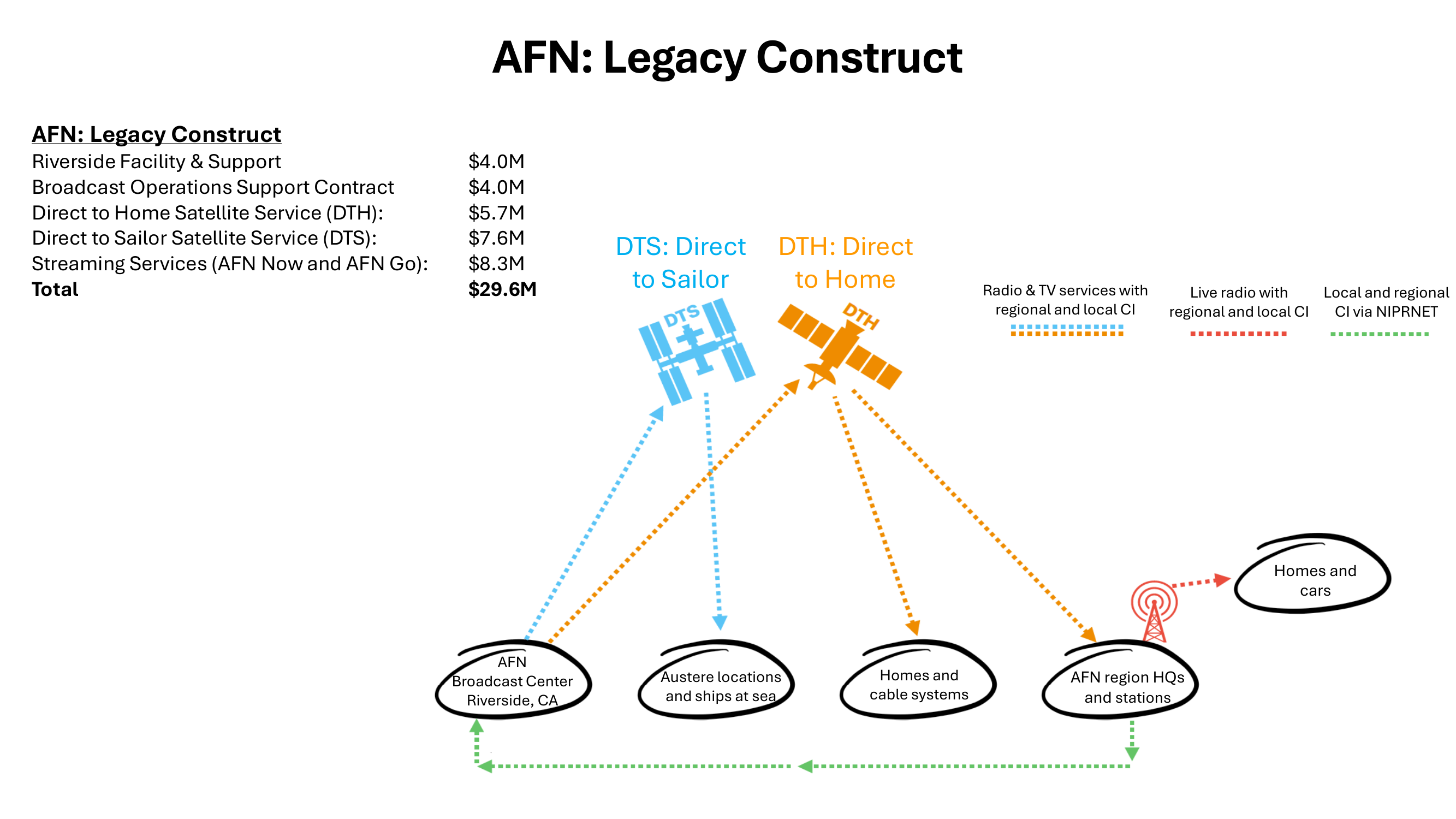
AFN previously operated three parallel distribution systems — two satellite networks and a streaming platform — anchored by a broadcast facility in Riverside, CA. Five separate cost lines. $29.6M per year.
Riverside Facility
& Support
& Support
$4.0M
Annual facility ops cost
Broadcast Ops
Support Contract
Support Contract
$4.0M
Annual contract cost
DTH Satellite
Direct to Home
Direct to Home
$5.7M
Annual contract cost
DTS Satellite
Direct to Sailor
Direct to Sailor
$7.6M
Annual contract cost
Streaming
AFN Now + AFN Go
AFN Now + AFN Go
$8.3M
Annual contract cost
Total annual spend
current state
current state
$29.6M
Five cost lines — four contracts, one facility